The most important building block of hemicelluloses is xylan. It is broken down into xylose oligomer residues by Xylanase - an enzyme, produced by most organisms, to utilize xylose as primary source of carbon. The Xylanase produced are classified into families, viz 5, 8, 10, 11 and 43 - of Glycoside Hydrolases (GH).

Xylanase from family GH 11 are monospecific, they consist solely of Xylanase activity, exclusively active on D-xylose containing substrates.They are inactive on aryl cellobiosidase. The fungal Xylanase are produced in higher concentrations, as compared to bacterial Xylanase, but have limited use in pulp bleaching, as they affect the viscosity and strength of the product. In the present study, we have worked upon the Xylanase of Bacillus brevis, which is fulfilling all the required quality needed to be a commercial Xylanase, and thus is used by many industries. The enzyme, when studied after modelling, provided similar structural configuration with high stability. When compared with other bacterial and fungal Xylanase structures, it provided better potential to ‘activity enhancement’ and ‘in silico handling’.
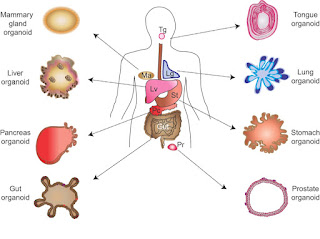
However, recent developments in organoid culture are motivating and
elevate hopes for replacing test animals with artificial human tissue models.
Possibility of creating functional tissue ex vivo has a potential to
revolutionize the way human therapeutics is perceived. Not only will it bridge
the gap between drug development and its clinical efficacy but also help
strategizing regenerative medicine. Successful human-tissue surrogates would liberate test animals or at least minimize their use for research purposes.
Potential drug candidates tested on human-tissue equivalents are expected to generate
clinically much more relevant data. Here we deliberate upon the options and
possibilities of accomplishing human organoid models for in vitro testing and
their significance in therapeutics.
At
the end of a mountain road in Austria during the summer of 2003, I waited for a
boat with my family on a dock at a large lake. Suddenly I saw a man fall to the side walk. His skin had turned that ashen blue color, and it was clear to me
that he was in cardiac arrest. There was a crowd of more than 75 persons just
standing and looking at him.

I knew what to do when there was no detectable
pulse or breathing. Cardio-Pulmonary Resuscitation (CPR) chest compressions
were started immediately. His skin color returned to nearly normal. After a few
minutes, a single bystander came up and said they knew how to do breaths. At that time, recommendations were for intermittent breathing as well as chest compressions. The stricken person made it alive to the EMS vehicle that took
nearly 30 minutes to arrive. While I do not know the eventual outcome, I do know
he was successfully resuscitated using an Automated External Defibrillator
(AED). Furthermore with the quick application of CPR, he likely had a full
recovery. Unfortunately, from the crowd response at that time, there were not
enough people trained to act in this emergency situation where seconds really
count.
Goal-oriented
human saccades were recorded under double-step paradigm. The stimuli consisted
of either visual or auditory-visual bi-sensory targets. Eye movement data were analyzed based on a 3rd-order linear horizontal saccadic eye movement model,where the inputs to the muscle were agonist and antagonist active-state
tensions that were described by pulse-slide-step wave forms with a post
inhibitory rebound burst (PIRB) based on a time optimal controller. Parameter
estimations were calculated using the system identification technique for
saccade parameters and neural inputs. Saccade amplitude transition function
(ATF) and response latency indicated the saccade programming mechanism. The
responses were affected by when the second peripheral target was presented.
Protein
trafficking or protein sorting is the mechanism by which a cell transports
proteins to the appropriate position in the cell or outside of it. This
targeting is based on the information contained in the protein. Many methods predict the sub cellular location of proteins in eukaryotes from the sequence information. However, most of these methods use a flat structure to perform
prediction. In this work, we introduce ensemble methods to predict locations in
the eukaryotic protein-sorting non membrane pathway hierarchically.


