Showing posts with label
breast cancer journal impact factor.
Show all posts
Showing posts with label
breast cancer journal impact factor.
Show all posts
The DNA methylation, in human cells regulates tumor growth
and it also indicates the breast cancer susceptibility. In a research they pinpointed the genes that are involved invariations that occur in methylationof the breast cancer epigenome. The DNA methylation(CG sites)sequences from
7-normal individuals and 8-breast cancer patients were compared by using
Statistical software package R and by Upperone-tailed chi-square tests.
Consensus Path Database is used to map selected CG sites to study the
biological relations between healthy individuals with patients affected by
tumour. Based on the data collected from PubMed and Gene Card, 26 potential
biomarker genes were discovered. All these data helps in the development of
novel treatments for breast cancers.
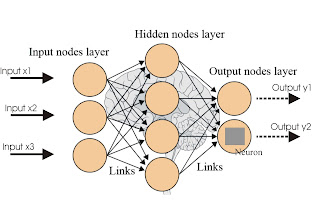
This paper uses the neural
networks with an incremental learning algorithm as a tool to classify a mass in
the breast (benign and malignant) using selection of the most relevant risk
factors and decision making of the breast cancer diagnosis To test the proposed
algorithm we used the Wisconsin Breast Cancer Database (WBCD). ANN with anincremental learning algorithm performance is tested using classificationaccuracy, sensitivity and specificity analysis, and confusion matrix. The
obtained classification accuracy of 99.95%, a very promising result compared
with previous algorithms already applied and recent classification techniques
applied to the same database.


